【neuro reads 1-2: Open Neuroscience Initiative】Dendrons? Trees?
NEUROSCIENCEREADSBOOK-INSPIRED THOUGHTSOPEN SOURCEOPEN NEUROSCIENCE INITIATIVE
prologue of [reads]:
books that may be inspiring + my personal thoughts & happenings
Instead of recommendation or not, my writing is more of 'What am I thinking when reading them? What new thoughts do they spark within me?' Of course, while I would state certain parts in quotation as the actual quotes or information that I'd love to keep or share as they are, most writings are not necessarily about me agreeing or disagreeing.
What I read would most likely inspire or spark my personal stories, connect with my personal experience, or even bring up totally irrelevant things that are creatively and uniquely discovered to be expressed and understood. Also, my writing is rather jumpy, creative, and coming all over the place as I 'play' with my expressions and the use of words. My creations may include rather experimental expressions and grammar in a uniquely beautiful way, while information is conveyed with love. Do fact check and/or have your own thoughts while our world is always updating the latest information as we grow and outgrow ourselves. I may update any new thoughts as I grow as well. About blogging: while I tag 'open source', 'open educational resource', etc., the licences and usage are defined by the authors of the books, while I'll most probably link and cite the resources. Meanwhile, my personal blogs, thoughts, etc., that are newly crafted are openly licensed, as stated on this site (CC BY-NC 4.0 ).
It's a process of understanding different parts of the world. I view them as Information from communities that bring different values close to us. Then, we rethink to filter or reconstruct new ecosystems with the parts we love to understand, accept, and create our own world. Might also just feel and be here.
Seeing worlds as a world and a world as worlds.
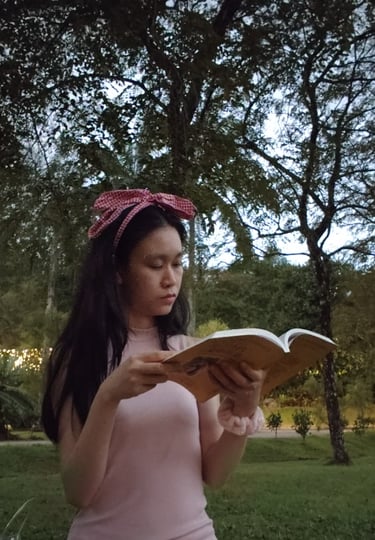
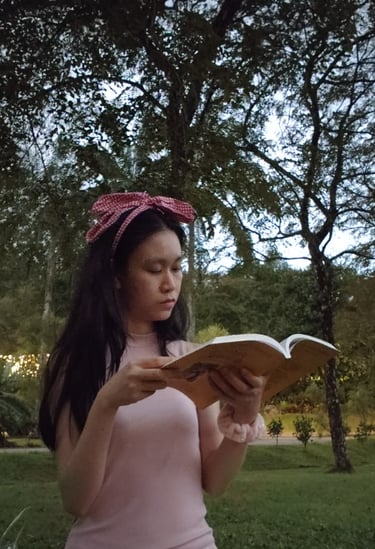
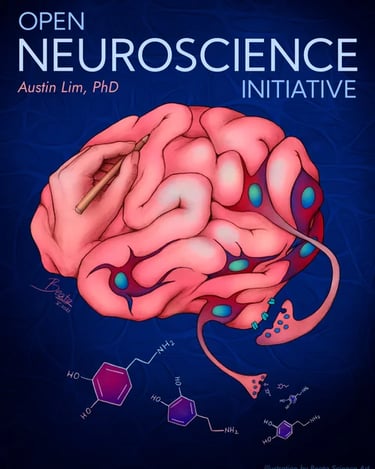
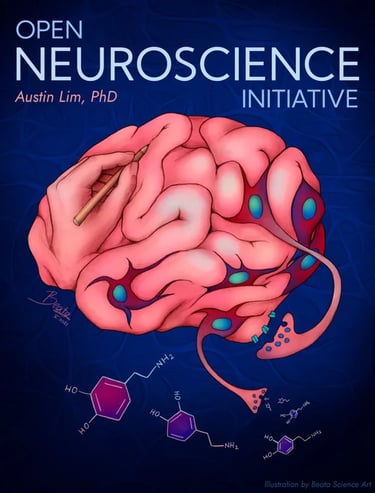
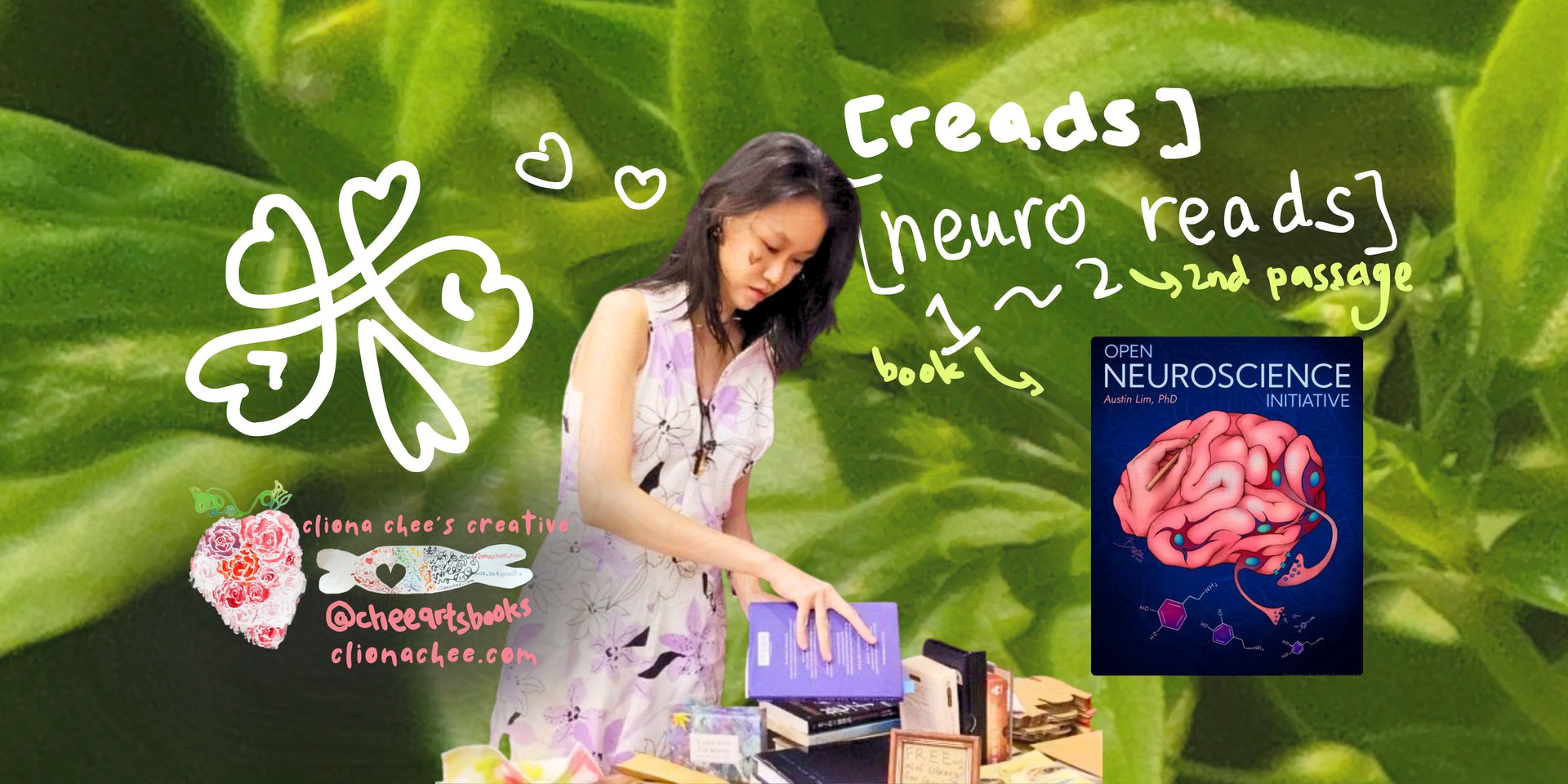
Open Neuroscience Initiative — Austin Lim, PhD
Published on June 30th, 2021, the Open Neuroscience Initiative is a free open educational textbook developed by Austin Lim, PhD, and funded by the Vincentian Endowment Fund of DePaul University.
Thank you very much, with lots of love.
Information, inspirations & thoughts
1. Experimental Design
If you still remember from where we left off, we talked about expanding beyond the ways of retrieving new information mentioned. However, we also let ourselves know, appreciate and welcome these methods in our lives with much love and respect. Let's do a recap.
From Open Neuroscience Initiative (this book) ~
Neuroscience is understood via:
1. Experimental design
2. Observational study
3. Case study
By looking at these methods used one by one, we have more detailed thoughts inspired by the more detailed information as well.
Independent variable: factor being changed, e.g. num. of hours to read
Dependent variable: factor being influenced, e.g. understanding of information
Confounding variables: num. of sleep, similar age, gender distribution, educational history, info to be understood &// applied, etc.
Control group: unaffected ones, remain the original, e.g. num times as 0, and then test your understanding of the material.
*these are my personal interpretations combined with the real exact texts for easier understanding. The original texts inspire me and let me rethink or adjust them into my own ways of thinking, living, and conveying messages.
Neuroscience facts that are slightly interesting
2. Observational Study ≈ Quasiexperimental Design
One of the facts that I've jotted down and searched via Ecosia is
'observational study ≈ quasiexperimental design' or 'quasi-experimental design'.
From the search, my personally interesting finding would be that the changing variable, a.k.a. the independent variable is oftentimes already fixed by certain conditions. In this case, the personal health conditions of the ones involved in the study. It is not allowing a lot of flexibility for the experiment and/or study itself compared to the other ways, but it's more caring and flexible in terms of caring for the world and experimenting with different situations in the world.
Meanwhile, some explain it as the following:
Quasi-experimental design (QED): Diagnose, Plan, Measure, Reflect.
Back to being inspired by this book, I imagine different groups of people separated into the a group that we knew were different with medical specifications and another group of the healthier ones. They then conduct the study ethically while it might have less randomisation that affects confounding variables. This may affect the interpretation of the data.
Demonstrates Correlation, not Causation.
3. Case Study
Examine rare cases with extra details.
E.g. Changes of personality caused by frontal lobe that's regulating our inhibitions.
Know more about 'Inhibition' and 'Brainwork' here. While it's an old material, it reminded me of a more recent and interesting read, Seven and a Half Lessons About the Brain by Professor Lisa Feldman Barrett. They mentioned the brain's ways of 'budgeting'. I'll hopefully be talking about the book soon, as I already bought it, with the beautiful, vibrant colours on the book cover looking as sophisticated as the brain. You may start with this interview for those who've heard about our wonderful neuroscientist here for the first time.
Back to knowing 'case study'.
Also, only show 'Correlation', not 'Causation'.
Or, I shall say: it then sparks discussion and in-depth research to understand the correlation and possible causation.
Okay, it took a shorter time to know about 'case study', but it got me thinking and researching about the information that is relatively new to me. For example, I found out the term 'neural inhibition' and browsed through different mental health issues linked to it. Then, knowing that it means fewer and/or more controlled activities.
Afterwards, I found other videos that are interesting to watch for people who are interested. Let me share it here with you to feel the beauty of knowledge and sharing.

Harvard Online. (2017, April 20). Excitation and inhibition of neurons. (Part of the "Fundamentals of Neuroscience" online course). YouTube.
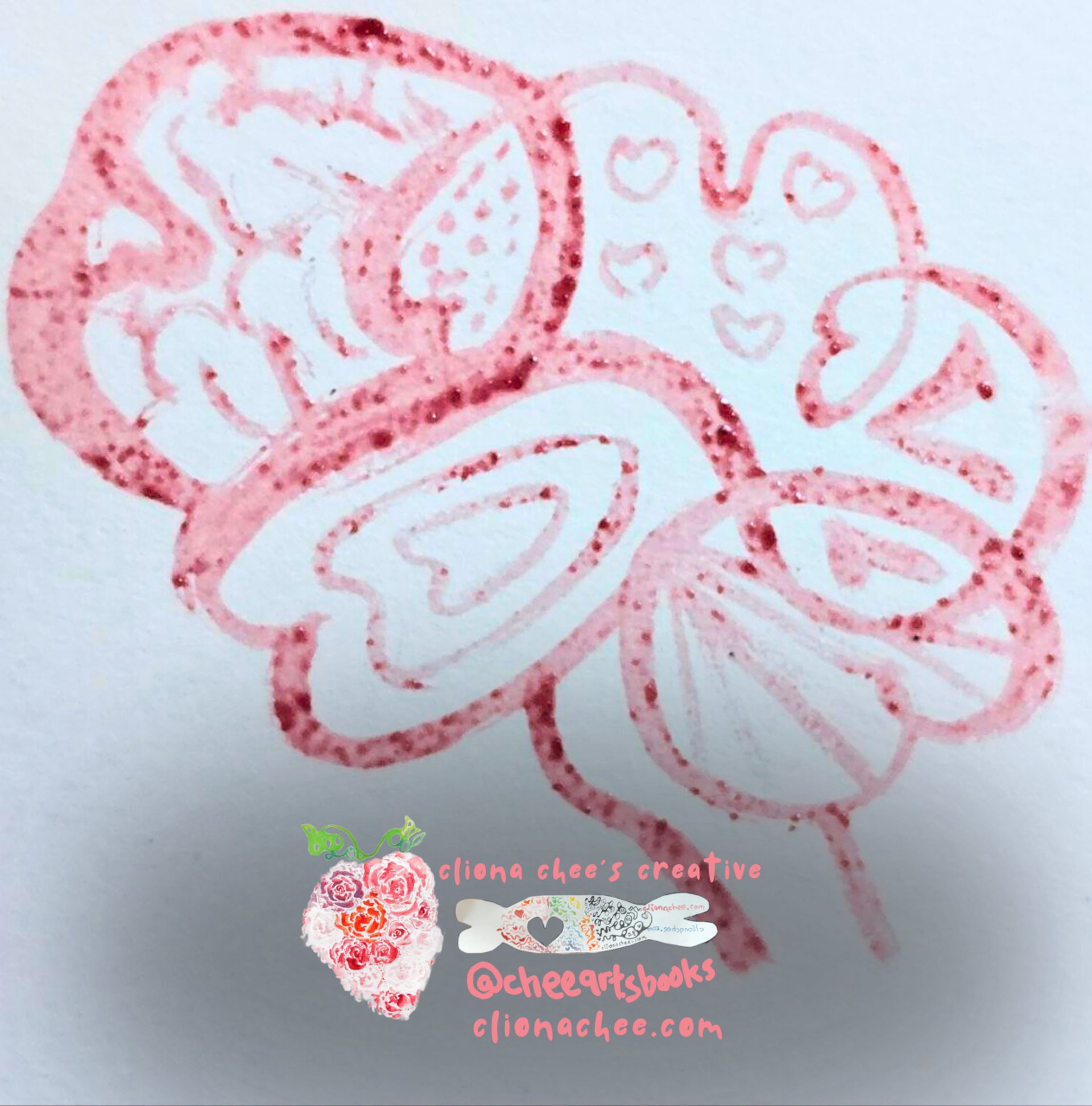
The 'dendrite' comes from 'dendron' that comes from the meaning of 'tree' just gives me chills. I have been seeing and loving these networks as well as the cycles in nature. As above, so below, along with the other structures and non-structures that are somehow deeply connected when we dive deeper. Just love how the trees have roots and branches, while the neurons have dendrites and axons.
While we'll probably dive deeper into the microscopic vision in another way, I'm here to mention that there is so much information that's interesting at this age of time. I'm grateful for that. There's also a Nervous System Crash Course by Hank Green and their team to cover the basics along with some interesting facts. I'd probably collect all this interesting information into a list or collection if it's needed for others.
Expanding beyond the information in the book
We've mentioned the interesting expressions and expansion of retrieving and sharing the information in the previous blog/chapter. Here, we're going back to see what it's like in our known ways. Then, cycle back to expand more possibilities yet to come while we pause with a note of videos, books, and other interesting creations. I love and appreciate all the effort, as well as the naturally forming ways of all the kind souls conveying what we are looking for to us.
Thanks, with love.
version 1 was published on 17-12-2025
minor grammar check on 31-1-2026
edited & reviewed on 4-5-26 & 5-5-26
'Seeing worlds as a world and a world as worlds.'
Life is a beautiful cycle with unexpected surprises~
thanks w/ love,
Chee
❤
subscribe to my mailing list via paragraph for more by clicking here.
if you use paragraph (web 3 blog storage & publishing site): paragraph.com/@chee
if you use substack instead: substack.com/@cheeartsbooks
eco-friendly essentials shipping worldwide: chee.teemill.com
Instagram: @cheeartsbooks
YouTube: @cheeartsbooks
Cliona Chee P. K. | accepted by nature of Love Legacy
Copyright © 2025 all rights reserved with love
All content on this site is openly licensed via CC BY-NC 4.0 (Creative Commons Attribution-NonCommercial 4.0 International License), except where otherwise noted. Icons by Font Awesome.
I warmly appreciate being informed of adaptations to maximise our collaboration. You are welcome to share or adapt it for non-commercial purposes with proper credit. For any commercial use, please kindly contact me for permission. Commercial events, products, and/or services are traded under the mutual agreement of User Experience Agreement, except where otherwise stated. Thanks, with love.